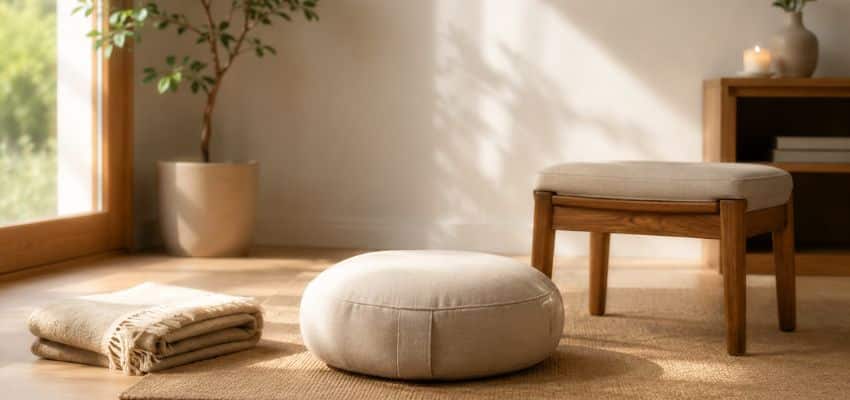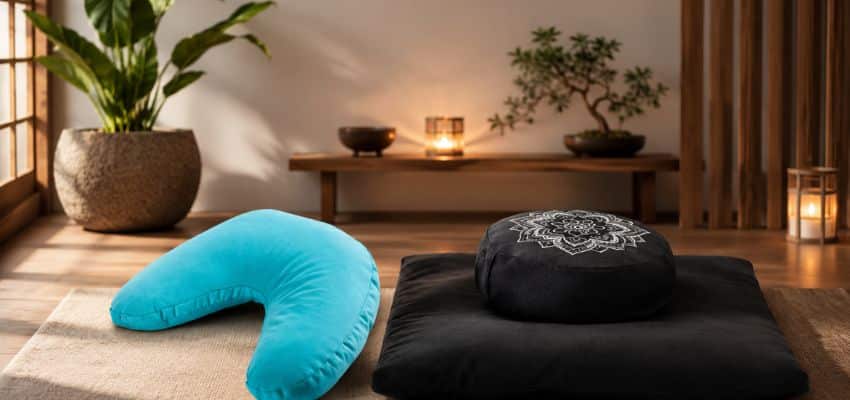
A meditation cushion can make sitting easier, but it is not the first thing every beginner needs to buy.
If you can sit comfortably for a few minutes on a chair, folded blanket, or firm pillow, you may not need a dedicated cushion yet. But if your hips feel too low, your knees press into the floor, or discomfort keeps ending your practice early, the right cushion can reduce friction and make meditation easier to repeat. This meditation cushion buying guide helps you decide whether a cushion is worth buying, what type makes sense for your body and floor setup, and which beginner-friendly products can be used as examples of different comfort needs. For a broader starter setup beyond cushions, see our smart meditation gear for beginners guide.
- When beginners actually need a meditation cushion
- When you can skip buying one and start with what you already have
- How to choose between a cushion, chair, blanket, mat, or full set
- How cushion height, firmness, shape, and floor support affect comfort
- Product examples for different beginner sitting problems
- Buying mistakes to avoid so you do not overbuy your first setup
Quick answer: do beginners really need a meditation cushion?
- You do not need one just to begin If you can sit for 3–5 minutes on a chair, folded blanket, or firm pillow without discomfort ending the session, start there first.
- Consider a cushion if your hips feel too low A cushion can lift your hips and make floor sitting feel more stable, especially if your knees, hips, or lower back feel strained.
- Consider a mat or zabuton if the floor is the problem If your knees, ankles, feet, or lower legs press into a hard floor, a seat cushion alone may not solve the main friction.
- Choose one tool for your biggest friction Do not buy a full setup just because it looks complete. Start with the smallest tool that solves the problem that keeps interrupting your practice.
- Use products as examples, not as a shopping list The examples below show different types of beginner-friendly cushion solutions. You do not need all of them.
The smart rule: buy the smallest setup that helps you practice more consistently, and skip anything that does not solve a real sitting problem.
The Smart Rule: Solve the Biggest Sitting Friction First
A meditation cushion is useful only when it removes a real source of friction. For one person, that friction may be low hips. For another, it may be knee pressure on the floor. For someone else, the best solution may be a chair, a folded blanket, a timer, or a shorter session.
-
Your hips feel too lowIf your knees sit higher than your hips or your lower back rounds quickly, a cushion may help by giving your seat more lift.Look forA cushion with enough height to make sitting feel more stable after a few minutes.AvoidBuying the tallest cushion automatically without checking whether it makes you feel wobbly.
-
The floor bothers your knees, ankles, or feetIf the discomfort comes from pressure against the floor, a zabuton, mat, blanket, or padded surface may matter more than another seat cushion.Look forFloor support that reduces pressure below the hips.AvoidUsing a taller cushion to solve a floor-padding problem.
-
Cross-legged sitting feels crowdedIf your thighs, hips, or knees feel cramped, shape may matter more than brand. A crescent or V-shaped cushion may create more room than a basic round cushion.Look forA shape that fits how you actually sit, not how you think you should sit.AvoidAssuming a classic round zafu is the best fit for every body.
-
You do not want to sit on the floorA chair can be a valid beginner setup. Meditation does not require floor sitting, especially if the floor makes practice harder to repeat.Look forA stable chair that lets your feet rest and your posture feel relaxed but alert.AvoidForcing floor sitting because it looks more traditional.
-
You are buying because you feel unpreparedIf the real problem is uncertainty, start smaller. A timer and a comfortable existing seat may be enough for your first week.Look forOne simple tool that makes starting easier.AvoidBuying a full meditation setup before you know your habit will stick.
A good beginner setup is not the setup with the most items. It is the setup that removes the biggest obstacle between you and a short, repeatable practice.
Cushion, Chair, Blanket, Mat, or Full Set?
- Use a chair if floor sitting stops you from practicing A chair is often the simplest beginner tool if sitting on the floor creates more stress than calm.
- Use a folded blanket if you only need light lift A firm folded blanket can help you test whether extra height improves comfort before buying a dedicated cushion.
- Use a cushion if your hips need stable lift A meditation cushion makes sense when raising your seat helps your hips, knees, or lower back feel less strained.
- Use a mat or zabuton if the floor is hard If your knees, ankles, feet, or lower legs feel pressure from the floor, floor padding may matter more than cushion height.
- Use a full set only if two problems exist A zafu and zabuton set is useful when you need both seat lift and floor padding. It is more setup than some beginners need.
The goal is not to own the most complete setup. The goal is to remove the specific friction that keeps ending your practice early.
How to Choose a Meditation Cushion Without Overbuying
-
1. Cushion heightHeight changes how your hips, knees, and lower back feel during floor sitting. A cushion that is too low may not help enough. A cushion that is too high may feel unstable.Look forEnough lift to make your seat feel steady without making you feel perched or tilted.AvoidAssuming a higher cushion is always better.
-
2. Firmness and fillBuckwheat cushions often feel more structured and adjustable. Softer cushions can feel cozier but may compress more. The right choice depends on whether you need stable lift or soft comfort.Look forA fill type that supports how you sit for several minutes, not just how it looks in photos.AvoidChoosing only by softness if you need stable posture support.
-
3. ShapeRound zafus are the classic baseline. Crescent and V-shaped cushions can create more room around the hips and thighs. Floor pillows feel more casual and cozy but may be less traditional.Look forA shape that fits your normal sitting style.AvoidBuying a shape because it looks traditional, not because it fits your body.
-
4. Floor supportA cushion lifts your hips. A mat or zabuton pads the surface under your knees, ankles, feet, and lower legs. These solve different problems.Look forA mat or zabuton only when the floor itself is part of the discomfort.AvoidBuying a full cushion-and-mat set before knowing whether you need both.
Before choosing a high, standard, or low cushion, read our meditation cushion height guide for a beginner-friendly fit check.
Product Examples by Beginner Comfort Problem
Choose one example only if it solves your main sitting friction. If your current chair, folded blanket, or pillow already works for short sessions, read do you need a meditation cushion before buying.
Example 1: Adjustable Buckwheat Cushion for Beginners Who Are Unsure About Height
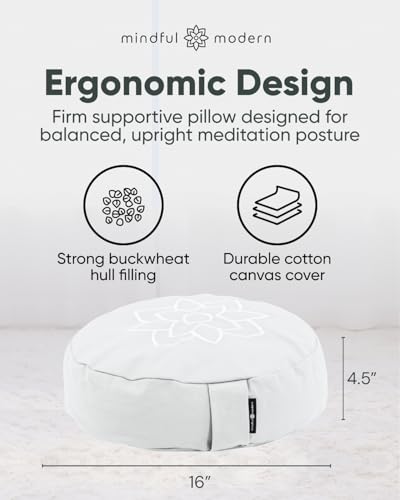

This is the broadest beginner pick because the listing highlights buckwheat hull fill, a removable washable cotton cover, and a carry handle. It fits readers who want a practical first meditation cushion without jumping into a full cushion-and-mat setup.
- Useful example of a structured first cushion
- Buckwheat fill can feel more stable than very soft pillows
- Removable cover and carry handle are practical beginner details
- Works as a simple one-item setup
- Still may be unnecessary if a chair or folded blanket already works
- Does not include floor padding for knees or ankles
- May need storage space in a small home
Example 2: Traditional Zafu for Beginners Who Want a Dedicated Floor Seat
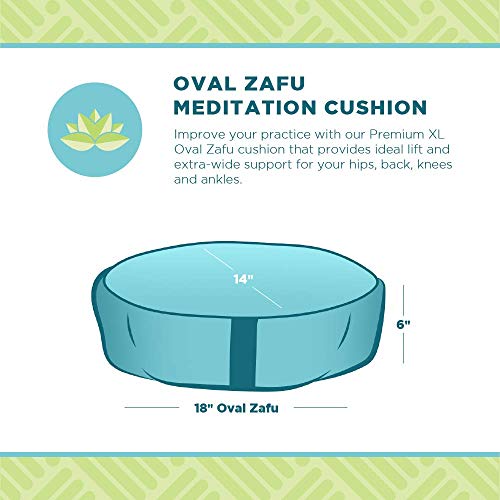

This pick fits beginners who want a classic zafu-style meditation pillow rather than a soft decor-style floor cushion. The supplied Amazon title lists cotton/buckwheat fill, an oval size option, and Made in USA positioning.
- Good example of a classic meditation cushion type
- Simple one-cushion setup
- Useful for readers comparing regular pillows with dedicated zafus
- Can feel more intentional than using a random household pillow
- Not automatically better than a chair or blanket for every beginner
- Does not solve hard-floor pressure by itself
- May feel too traditional for casual home practice
Example 3: Shaped Cushion for Cross-Legged Sitting Friction


This product has the clearest cross-legged use case because the supplied Amazon title says it provides support in cross-legged sitting. It is a good fit for readers who feel crowded or unsupported on a simple round cushion.
- Useful example of solving a shape problem, not just a height problem
- May give hips and thighs more room than a basic round cushion
- Helpful for readers who mainly sit cross-legged
- Shows why one cushion shape is not best for everyone
- Less universal than a basic round zafu
- May not help if the floor itself is the problem
- Not useful for people who prefer chair meditation
Example 4: Zafu and Zabuton Set When the Floor Is the Problem
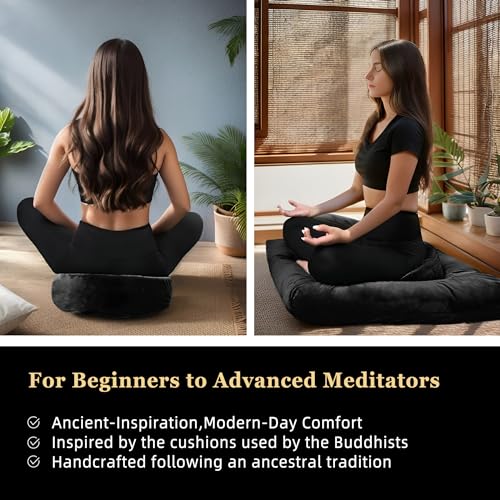
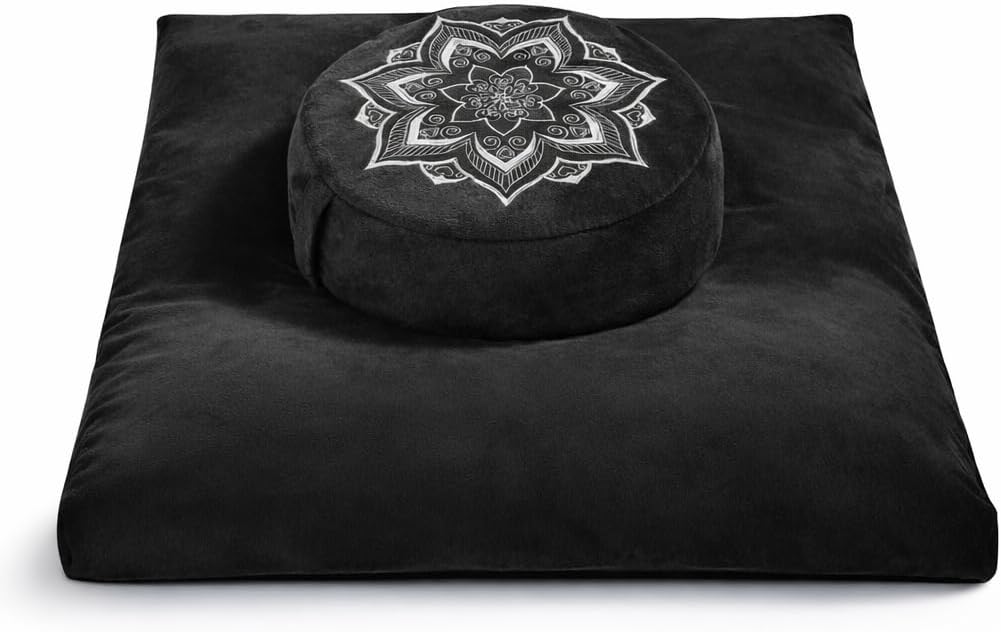
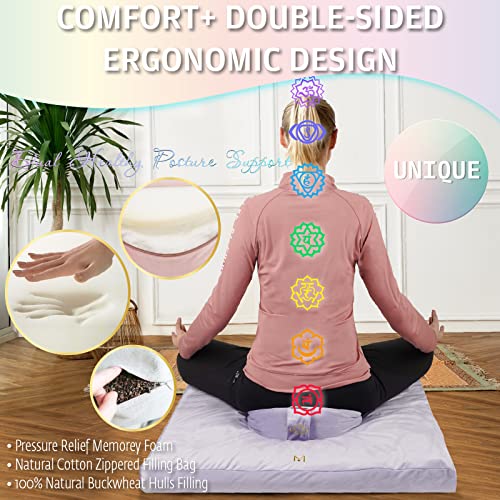
This is the best fit when the reader needs more than a single seat cushion. The supplied Amazon title lists a zafu and zabuton set, buckwheat hull and memory foam materials, adjustable floor pillow wording, and a removable velvet cover.
- Shows when a full setup can be useful
- Combines seat lift with floor padding
- May help on hard floors
- Can reduce the need to buy separate pieces later
- More gear than many beginners need
- Bulkier to store
- Not the best first step if you have not tried a simple setup yet
Example 5: Floor Pillow Style Cushion for Casual Home Sitting

This pick fits the sitting-comfort angle because the supplied Amazon title describes it as a comfortable and supportive floor pillow for adults. It is better positioned as a comfort-first floor cushion than as a strict traditional zafu.
- Good example of a less traditional comfort-first option
- May feel more familiar for casual floor sitting
- Can fit a simple home practice space
- Useful for readers who dislike strict meditation gear
- May compress more than a structured cushion
- May not provide enough stable lift for everyone
- Can blur the line between meditation cushion and decorative floor pillow
When You Should Not Buy a Meditation Cushion Yet
Beginner Buying Mistakes to Avoid
-
Buying the tallest cushion automaticallyA high cushion is useful only if it improves sitting stability. If it makes you feel perched, tipped forward, or wobbly, it may be too tall for your beginner setup.Look forEnough lift to make sitting feel steady after a few minutes.AvoidChoosing a high cushion just because it looks more supportive.
-
Choosing by looks onlyA beautiful cushion can still be the wrong height, shape, or firmness for the way you sit. Style matters, but comfort fit should come first.Look forA cushion shape, fill, and size that match your actual sitting style.AvoidBuying only because the color, fabric, or product photo looks nice.
-
Ignoring compressionSoft cushions may feel cozy at first but sit lower after a few minutes. Firmer cushions may hold their shape better, but they are not automatically better for every beginner.Look forA fill type and firmness level that keep enough support without feeling too hard or too collapsed.AvoidAssuming the listed height is exactly how high the cushion will feel when sitting.
-
Forgetting the floorIf the floor bothers your knees, ankles, feet, or lower legs, another seat cushion may not solve the problem. Floor padding may be the smarter tool.Look forA mat, zabuton, blanket, or padded surface when pressure starts below the hips.AvoidUsing a taller seat cushion to fix a floor-pressure problem.
-
Buying a full setup too earlyA complete zafu and zabuton set can be helpful on hard floors, but many beginners can start with one cushion, a chair, or a folded blanket first.Look forA simple first setup that solves your main comfort problem.AvoidOverbuying accessories before you know how you prefer to sit.
Final Checklist Before Buying a Meditation Cushion
- What problem am I solving? Low hips, hard floor, cramped sitting, lack of routine, or something else?
- Can I test a no-buy version first? Try a chair, folded blanket, firm pillow, or shorter session before buying gear.
- Do I need seat lift or floor padding? A cushion and a mat solve different problems. Do not buy both unless you need both.
- Will this make practice simpler? A good tool should reduce friction. If it adds decisions, storage problems, or pressure to practice perfectly, skip it.
- Am I buying one useful tool or building a full setup too soon? For most beginners, one helpful tool is better than a full collection of meditation gear.
The best beginner cushion is not the most expensive or most traditional option. It is the smallest tool that helps you sit comfortably enough to practice again tomorrow.
So, should beginners buy a meditation cushion?
- You do not need a meditation cushion just to begin meditating.
- Consider buying one if low hips, unstable floor sitting, or discomfort keeps interrupting your practice.
- If the floor hurts your knees, ankles, or feet, floor padding may matter more than another seat cushion.
- If a chair, folded blanket, or firm pillow works for short sessions, start there first.
- Use product examples to understand your options, but do not turn meditation into a shopping project.
A meditation cushion can be a useful beginner tool, but only when it solves a real sitting friction. Start with the simplest setup that works. If you need more support, choose one tool that matches your actual problem: seat lift, floor padding, sitting shape, or routine consistency. Smart meditation gear is not about owning more products. It is about choosing fewer tools that make practice easier to repeat.