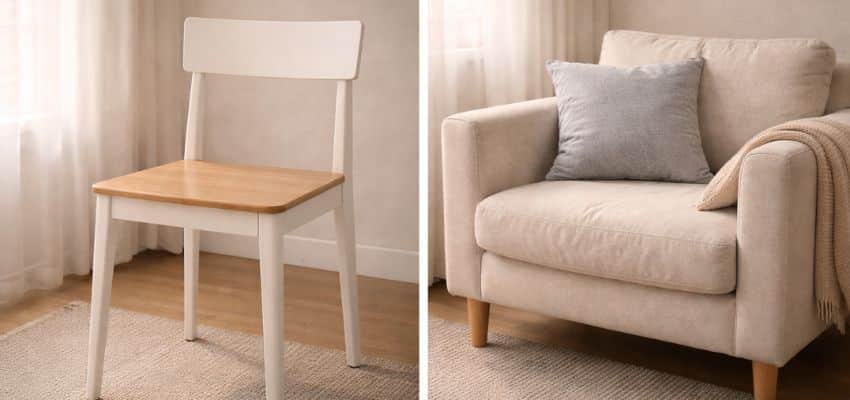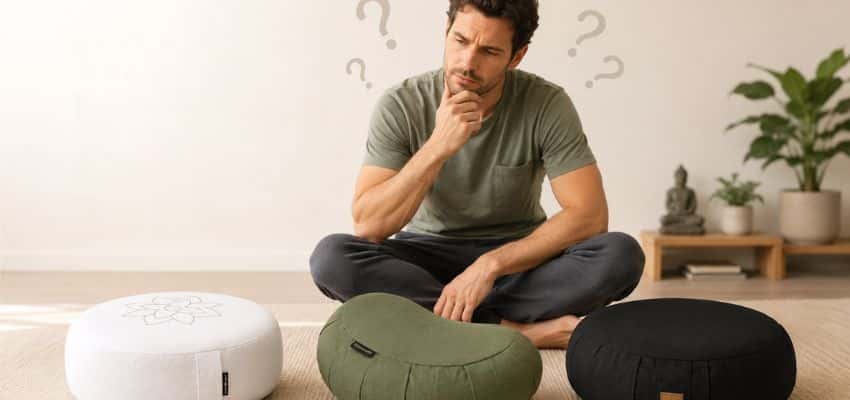
Choosing the right meditation cushion height is not about following a trend or buying the tallest cushion you can find. It is about finding enough lift for your sitting style, hip angle, knee position, and everyday comfort.
For many beginners, the right cushion height helps the hips sit slightly higher than the knees so floor sitting feels more stable and less forced. But a high meditation cushion is not automatically better for everyone. Your ideal height depends on how you sit, how your hips and knees settle, whether your lower back rounds, and whether the floor itself is causing pressure. This guide walks through those fit signals so you can choose a cushion height that supports a more comfortable home practice without overbuying gear you do not need.
- How meditation cushion height affects sitting comfort
- When a standard cushion is enough
- When a higher cushion may make sense
- How tight hips, knee position, and sitting style change the fit
- When you may need a zabuton instead of a taller cushion
Quick Answer: What Meditation Cushion Height Do You Need?
Use these as starting points, not fixed rules. The right meditation cushion height depends on your sitting style, hip angle, knee position, and how your body settles after a few minutes.
Why Meditation Cushion Height Matters
The Hips-Higher-Than-Knees Rule, Explained Simply
What “hips higher than knees” means
- Hips
Your hips are the sitting point on top of the cushion. A little lift can help your pelvis tilt more naturally instead of sinking backward.
- Knees
Your knees do not need to be pressed flat to the floor. The goal is simply to avoid a position where the knees float so high that your hips, back, or legs feel strained.
- Cushion height
The right meditation cushion height gives enough lift for your body and sitting style. For many beginners, that means the hips sit slightly higher than the knees, but the exact height depends on flexibility, leg position, and how the cushion compresses.
Why beginners hear this advice
- It gives beginners a simple fit check Instead of guessing by inches alone, the hips-higher-than-knees idea gives you a quick way to notice whether your cushion is creating enough lift.
- It connects cushion height to sitting comfort Meditation cushion height affects how your hips and knees settle, so this advice helps explain why sitting directly on the floor may feel harder for some beginners.
- It helps compare cushion types A zafu, crescent cushion, or adjustable buckwheat cushion may all change the sitting angle in different ways. This rule gives you a simple lens for comparing them.
- It should stay flexible Your hips do not need to be dramatically higher than your knees. The goal is a stable, comfortable seat, not a forced posture target.
Use this advice as a practical fit signal, not as a strict posture rule.
Do not force the hips-higher-than-knees idea if it makes you feel tipped forward, unstable, or tense. Treat it as a comfort signal, not a rule. If your seat feels steady and your knees already settle comfortably, chasing extra height may make sitting feel worse instead of better.
Common Meditation Cushion Heights
Low cushions
- Best for
Low cushions can work for people who already sit close to the floor comfortably and only need a small amount of lift under the hips.
- Comfort signal
A low cushion should feel grounded and stable. It should not make your hips feel trapped or make the sitting position feel harder to hold.
- Who should be careful
Beginners who need more hip lift may find a low cushion too flat unless they add another support layer or choose a slightly taller option.
Standard-height cushions
- Best for
A standard-height meditation cushion is often the safest starting point for beginners because it gives noticeable lift without feeling extreme.
- Comfort signal
It may be a good fit if the seat feels stable, your legs can settle naturally, and you do not feel pushed forward or folded backward.
- What to check
After a few minutes, notice whether the cushion still gives enough support or whether it feels much lower than expected.
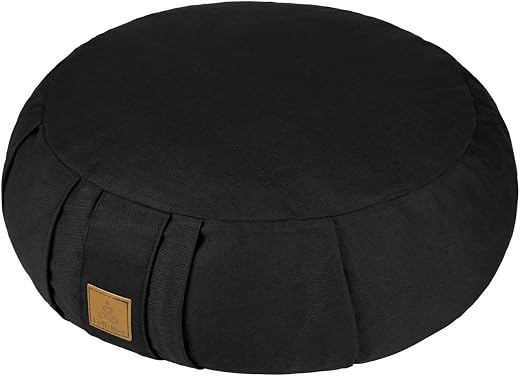
This round zafu is useful in this guide because the title lists a clear height: 5.5 inches. That makes it a simple reference point when comparing standard-height cushions against lower, higher, or extra-tall options. It is not included here as a universal best pick; it is included as a practical example of a common fixed-height cushion for beginners comparing meditation cushion height.
High meditation cushions
- Best for
High meditation cushions can work for sitters who need more lift than a standard cushion provides.
- Comfort signal
The extra height should make the seat feel more open and stable, not perched or forced.
- Who should be careful
If a high cushion makes you feel tipped forward, wobbly, or disconnected from the floor, it may be too tall for your current sitting style.
Extra-tall or jumbo cushions
- Best for
Extra-tall or jumbo cushions are for sitters who already know a standard cushion does not give enough lift.
- Comfort signal
The cushion should make the sitting angle feel easier while still letting you feel steady and grounded.
- Beginner caution
Most beginners should not start with extra height unless they have a clear reason. If the cushion makes you perch instead of sit, it is probably too tall.
How to Choose Cushion Height by Sitting Style
Cross-legged and Burmese-style sitting
- Cross-legged sitting usually needs clear hip lift If you sit cross-legged, cushion height matters because the seat needs to give your hips enough lift for your legs to settle without feeling crowded.
- Burmese-style sitting needs steady leg placement For Burmese-style sitting, choose enough height to let both legs rest in front of the body without making you feel perched or pushed forward.
- Check the position after a few minutes Do not judge the cushion only when you first sit down. Wait a few minutes and notice whether the seat still feels stable after the cushion settles.
For floor sitting, meditation cushion height should support the way your legs naturally settle, not force a specific posture.
Kneeling with a bench
-
Bench height matters more than cushion heightIf you meditate kneeling, the main seat support is usually the bench, not a zafu cushion. Look at bench height, bench angle, and whether your shins have enough space.Look forA meditation bench height that lets your hips feel supported without putting too much pressure on the knees or ankles.AvoidBuying a taller meditation cushion when the real issue is bench fit.
-
Floor pressure needs floor paddingIf your knees, shins, or ankles feel pressure from the floor, a zabuton or thick meditation mat may help more than changing meditation cushion height.Look forA zabuton mat or padded floor layer under the knees, ankles, and lower legs.AvoidExpecting a zafu cushion to solve pressure that starts below the hips.
-
Use a cushion only if it solves the right problemA cushion can still be useful for extra padding or alternative sitting styles, but it should not replace the support role of a properly fitted meditation bench.Look forA setup that separates seat height from floor comfort.AvoidAdding more gear without identifying whether the problem is seat height, bench angle, or floor pressure.
If you meditate in a chair, you may not need a floor meditation cushion at all. Focus on stable seat height, comfortable foot contact, and enough back support to sit without strain. A small seat cushion or lumbar support may be more useful than a high meditation cushion for the floor.
Match the cushion to the way you actually sit
- Start with your real sitting style Choose cushion height for the way you normally sit at home, not for a posture you rarely use.
- Adjust only when the setup feels off If the seat feels too low, too high, or unstable after a few minutes, adjust height, shape, or support from there.
- Separate sitting style from floor pressure If the issue comes from the floor under your knees, ankles, or feet, you may need floor padding rather than a taller cushion.
This keeps the decision practical: choose height for your sitting style first, then refine shape, fill, or floor support.
How to Choose Cushion Height by Body Fit

This cushion fits this section because crescent cushions are useful to discuss when tight hips affect floor sitting comfort. The shape can give the thighs and hips a little more room compared with a standard round zafu, which makes it a better example here than a generic cushion recommendation

This cushion is placed here because the article is about finding the right height, and many beginners are not sure what they need yet. A buckwheat-filled cushion is a practical example for discussing adjustability, firmness, and real sitting height after compression. It is especially useful when the reader is choosing between standard height, more lift, or a cushion that can be fine-tuned over time.
If your knees float high
- Treat it as a height signal Floating knees can be a sign that your seat is too low for your current sitting style.
- Add lift gradually Try a standard-height, slightly higher, or adjustable cushion before jumping to an extra-tall option.
- Do not press your knees down The goal is a more stable sitting angle, not forcing your knees flat against the floor.
Use knee position as one fit signal alongside hip comfort, seat stability, and how the cushion feels after a few minutes.
If your lower back rounds
-
Check whether the seat is too lowA low cushion can let your pelvis roll backward, which may make it harder to keep a comfortable upright seat.Look forEnough lift to make sitting feel steady without tipping you forward.AvoidAssuming you need the tallest cushion available.
-
Check whether the cushion collapsesA cushion that compresses too much may lose support after a few minutes, even if the listed height looks right.Look forA cushion that holds its shape under body weight.AvoidChoosing only by product photos or listed inches.
-
Try stability before adding more gearA firmer, slightly higher, or adjustable cushion may be enough if the issue is seat support.Look forStable lift, balanced sitting feel, and adjustable fill if you are unsure.AvoidBuying extra accessories before checking whether your seat itself is too low or too soft.
Signs Your Meditation Cushion Is Too Low
- Your knees stay high Your knees remain much higher than your hips after a few minutes of sitting.
- Your hips feel closed The front of your hips feels cramped instead of supported by the cushion.
- Your back rounds sooner than expected You keep losing a steady upright seat because your pelvis feels like it is sinking backward.
- The cushion collapses after a few minutes The cushion looks tall at first but no longer gives enough lift once your body weight settles in.
If two or more of these signs happen together, try a firmer, slightly higher, or adjustable cushion before assuming floor sitting is not for you.
Signs Your Meditation Cushion Is Too High
Higher is not always more supportive
A taller cushion only helps when your current seat is too low. If the extra height makes you feel perched or unstable, it is not the better fit.
Meditation cushion height should improve stability, not just add lift.
Height is only one part of the setup. Cushion firmness, shape, compression, sitting style, and floor padding also affect comfort.
A cushion can be the right height on paper but still feel wrong if the shape or support does not match your body.
A good cushion height should help you sit steadily. If you have to brace or fight for balance, the cushion is not supporting you well.
For beginners, stable comfort is more useful than trying to reach a perfect-looking posture.
Your cushion may be too high if these signs show up
If these signs show up, try less height, a wider base, a firmer cushion, or a different sitting style before assuming floor sitting is not possible.
When You Need a Zabuton Instead of a Taller Cushion
-
Your knees press into the floorIf knee pressure is the first thing you notice, a taller cushion may not solve the main problem.Look forA zabuton meditation mat or padded floor layer.AvoidExpecting seat height to cushion the knees.
-
Your ankles or feet feel compressedCross-legged, Burmese-style, and kneeling positions can all create pressure below the hips on hard floors.Look forA larger mat that supports knees, ankles, and feet together.AvoidUsing a small seat cushion as the only support on wood, tile, or thin rugs.
-
Your seat height feels fine but the floor feels hardThis is the clearest sign that you may need a zabuton instead of a higher meditation cushion.Look forA zafu-and-zabuton setup if you want both lift and floor comfort.AvoidChanging cushion height when your hip angle already feels stable.
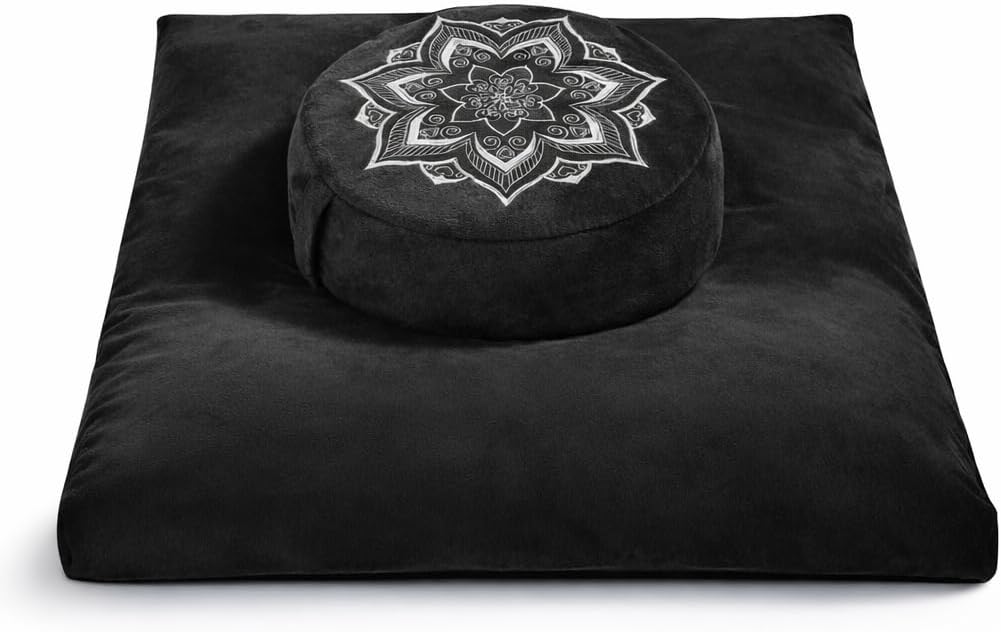
This product fits this section because the buying question is no longer only meditation cushion height. A zafu-and-zabuton set helps illustrate the difference between lifting the hips and cushioning the floor under the knees, ankles, and feet. It is most relevant for readers who sit on hard floors or feel pressure below the hips.
Meditation Cushion Height by Product Type
Round zafu cushions
- Useful as a simple height baseline A round zafu is a straightforward way to compare meditation cushion height because the seat shape is simple and familiar.
- Good when you want balanced lift Round zafu cushions can work well when you want even support under the hips without changing the seat shape too much.
- Check how stable the base feels The cushion should feel steady after a few minutes, not narrow, wobbly, or too soft for your sitting style.
Use a round zafu when you want a simple seat-height comparison before exploring crescent cushions or cushion-and-mat sets.
Crescent meditation cushions
-
Look at shape, not just heightA crescent cushion can feel different from a round zafu because the cutout shape gives more room around the thighs and hips.Look forA shape that lets your legs settle naturally while keeping the seat stable.AvoidChoosing a crescent cushion only because it looks more ergonomic.
-
Use it when round cushions feel crowdedIf a round cushion feels too centered, narrow, or tight around the legs, a crescent shape may feel more natural for some sitters.Look forEnough lift plus a seat shape that gives comfortable thigh space.AvoidAssuming crescent automatically means higher, softer, or better.
-
Compare real sitting feelWhen comparing round vs crescent meditation cushion options, check how the shape changes hip angle, leg placement, and stability after a few minutes.Look forA steady seat that supports your sitting style without forcing your knees down.AvoidBuying by shape without checking real sitting height and comfort.

This product belongs in the crescent cushion section because it helps illustrate how cushion shape can affect sitting feel, not just listed height. Use it as a practical example when explaining the difference between a round zafu and a crescent meditation cushion for hip angle, thigh space, and beginner comfort.
Buckwheat cushions
-
Look for stable liftBuckwheat fill can feel firmer and more structured than softer fills, which may help the cushion hold its sitting height more consistently.Look forFirm support that keeps your hips lifted without feeling rigid.AvoidA cushion that feels overfilled, hard, or unstable for your body.
-
Check adjustability if availableSome buckwheat cushions let you remove or shift fill, which can make the seat easier to fine-tune over time.Look forA removable inner liner, zipper access, or clear fill-adjustment design.AvoidAssuming every buckwheat cushion is adjustable.
-
Judge the feel after sittingBuckwheat can mold around your seat, so the real fit is easier to judge after a few minutes than from the listed height alone.Look forA balance of lift, firmness, and comfort after the cushion settles.AvoidChoosing only by inches without checking firmness and shape.
Kapok cushions
- Best fit
Kapok cushions can work for readers who prefer a lighter, more traditional cushion feel and do not need as much fine-tuning.
- Height feel
Kapok may feel supportive, but the real sitting height still depends on density, fill amount, and how much the cushion compresses under body weight.
- Buying caution
If you are unsure about cushion height, kapok may be less flexible than an adjustable buckwheat cushion because the height is usually not as easy to fine-tune.
Cushion and mat sets
- The cushion controls seat lift The zafu or seat cushion changes how high your hips sit.
- The mat controls floor comfort The zabuton adds padding under your knees, ankles, feet, and lower legs.
- The set changes the whole setup feel A cushion-and-mat set can feel more complete than a single cushion, especially on hard floors.
Beginner Buying Tips
Choose adjustable fill if you are unsure
-
Prioritize adjustability over guessingIf you are not sure which meditation cushion height will fit, choose a cushion that gives you some room to adjust the feel over time.Look forBuckwheat fill, removable fill, zipper access, or a design that can be fine-tuned.AvoidA fixed-height cushion that gives you no way to change the sitting feel.
-
Check how the cushion feels after sittingThe listed height is only a starting point. What matters is whether the cushion still feels supportive after a few minutes.Look forStable lift, steady support, and a seat that does not collapse quickly.AvoidChoosing only by the height shown in the product title.
-
Avoid jumping straight to extra heightIf you are unsure, adjustability is usually safer than buying the tallest cushion first.Look forA cushion that can be lowered, softened, or firmed up if needed.AvoidAssuming extra-tall means more comfortable.
Once you have a better idea of the meditation cushion height and support you need, compare our best meditation cushions for beginners to find a cushion that fits your sitting style and comfort needs.
Do not choose by height alone
The best fit is the cushion that makes your seat feel stable, not the one with the biggest height number.
A high meditation cushion helps only when your body needs extra lift. Too much height can make sitting feel less steady.
Real sitting height depends on fill, firmness, compression, width, and body weight.
This is why two cushions with similar listed heights can feel different after a few minutes of sitting.
Sitting style, body fit, hip comfort, knee position, and floor padding all change what height feels useful.
Use the listed height as a starting filter, then check how the cushion fits your actual setup.
Match cushion height with floor padding
- Use cushion height for seat lift Choose cushion height based on how much lift your hips need.
- Use floor padding for pressure points Choose a zabuton or mat when the floor bothers your knees, ankles, feet, or lower legs.
- Combine both only when needed A zafu-and-zabuton setup makes sense when you need both hip lift and floor comfort.
This keeps the buying decision clear: do not use a taller cushion to solve a floor-padding problem.
Do not try to solve every detail with the first purchase. Start with a cushion setup that feels stable and comfortable enough to use regularly, then refine the height, fill, shape, or floor padding as you notice what your body actually needs.
Choose the Cushion Height That Helps You Sit Comfortably
- Use height as a fit tool, not a fixed rule.
- Choose more lift only when your seat feels too low.
- Choose less height if the cushion feels unstable or forced.
- Consider adjustable fill if you are unsure.
- Add floor padding when the floor is the real problem.
The right meditation cushion height is the one that makes your sitting setup feel stable, comfortable, and realistic for your body. Start with your sitting style, check how your hips and knees settle, and remember that floor pressure may need a zabuton instead of a taller cushion. For a broader beginner setup, see our smart meditation gear for beginners guide.