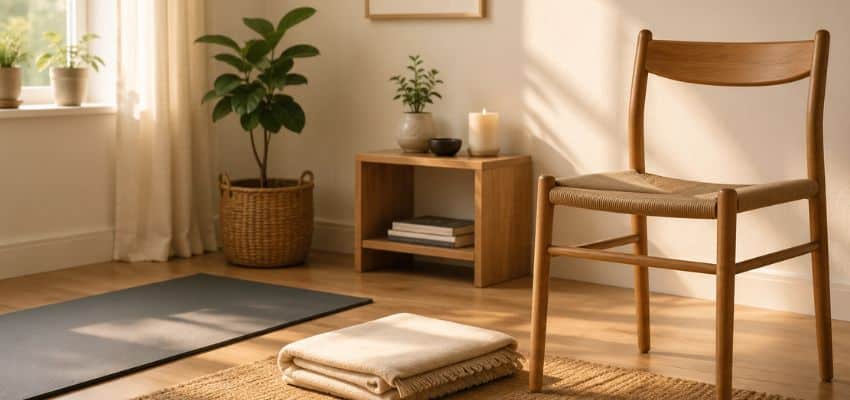
Your home can look perfectly fine on the surface. The furniture matches. The rooms are functional. Nothing is obviously “wrong.”
And yet, when you’re inside, your body doesn’t settle. You feel slightly on edge. Restless. As if something is always asking for your attention, even when you’re doing nothing.
This kind of discomfort is easy to dismiss. Many people assume it means their home isn’t stylish enough, organized enough, or thoughtfully designed enough. So they start looking for better products, smarter solutions, or new ideas to fix the feeling.
But an uncomfortable home is rarely about taste or effort.
More often, it comes from how everyday items quietly interact with your senses, your movements, and your mental energy. Objects that technically “work” can still create small moments of friction – moments that add up over the course of a day and make home feel harder than it should.
This article looks at those unnoticed sources of discomfort. Not to tell you what to buy or how to decorate, but to help you understand why a home that looks fine can still feel difficult to live in – and what that feeling is really trying to tell you.
An uncomfortable home is not about bad taste
When people feel uneasy in their own homes, the first instinct is often self-blame. Maybe their space isn’t stylish enough. Maybe they didn’t choose the right furniture. Maybe they’re just “bad” at creating a cozy home.
But discomfort doesn’t come from poor taste.
Many homes that feel uncomfortable are clean, well-organized, and thoughtfully furnished. Some even look better than average. The problem isn’t how the space appears – it’s how it behaves in daily life.
Your body doesn’t experience a home as a visual composition. It experiences it through small, repeated interactions: reaching for things, moving through rooms, hearing background sounds, noticing clutter at the edge of your vision.
When those interactions require constant adjustment, even subtly, your nervous system never fully relaxes.
This is why improving how a home feels often has very little to do with upgrading its look. What matters more is how much mental effort your environment asks from you, especially during ordinary moments.
A space that constantly demands attention, even in tiny ways, slowly creates tension – no matter how “nice” it looks.
How everyday items quietly create discomfort
Most discomfort at home doesn’t come from one big problem.
It comes from small, repeated moments where everyday items ask more from you than they should.
These moments are easy to overlook because nothing is “wrong” enough to stand out. But over time, they stack up and make your home feel mentally and physically tiring.
They demand attention when they shouldn’t
Some items constantly pull your focus, even when you’re not actively using them.
Open shelves filled with small objects. Cords that never quite disappear. Appliances that blink, beep, or visually dominate a room.
Each one asks for a bit of awareness: noticing, adjusting, ignoring. Your brain learns to stay slightly alert, instead of fully resting. A home that feels calm isn’t one that looks empty – it’s one where many things quietly stay out of the way.
This is why people often feel relief not when they add something new, but when they reduce the number of small decisions their space asks them to make. That sense of ease is closely tied to how having fewer everyday decisions to deal with can make calm feel more accessible.
They interrupt natural movement
Other items create discomfort through your body, not your mind. Furniture that forces you to squeeze past. Storage that requires bending, twisting, or reaching every time. Objects placed just slightly out of rhythm with how you move.
Individually, these interruptions seem trivial. But when your body has to constantly adjust its movements at home, it never fully relaxes. Over time, that physical friction turns into background tension you may not consciously notice – only feel.
They add mental friction to simple routines
Some items complicate tasks that should feel automatic. A kitchen tool that works, but needs extra steps. A storage system that makes sense logically, but not intuitively. Products that technically solve a problem while quietly creating new ones.
Each extra step adds a tiny pause: Where does this go? How do I use this again? Is there an easier way?
When these pauses repeat throughout the day, your home starts to feel demanding – not because it’s chaotic, but because it never lets your attention fully rest.
Useful doesn’t always mean comfortable
Many everyday items earn their place at home simply because they work. They do what they promise. They solve a practical problem. On paper, they make sense.
But usefulness alone doesn’t guarantee comfort.
When function ignores the body
Some products are designed to perform a task, not to be lived with. They prioritize efficiency, features, or durability – while overlooking how the body actually interacts with them.
A chair that supports weight but encourages stiffness. A handle that fits measurements, not hands. An appliance that’s powerful, yet loud or jarring to use.
Nothing is technically wrong. And yet, using these items feels slightly draining. When the body has to adapt itself to objects over and over again, comfort quietly disappears – even though everything still “works.”
This gap becomes easier to understand once you notice how the line between something being usable and something feeling comfortable in daily life often gets blurred.
Why “works fine” can still feel wrong at home
At home, we don’t just complete tasks – we repeat them. What feels acceptable once can feel exhausting when it becomes part of a routine.
An item that requires extra force, attention, or adjustment might seem insignificant in isolation. But when it’s used every day, those small demands accumulate. Over time, your home starts to feel less like a place of rest and more like a series of minor obstacles.
This is why discomfort at home often shows up as a vague feeling rather than a clear complaint. Nothing is broken enough to replace. Nothing fails enough to justify change. Yet something always feels slightly off.
Comfort isn’t about perfection. It’s about how little resistance your environment creates when you move through it – physically and mentally.
Why adding “better” items often makes things worse
When a home feels uncomfortable, the most common response is to look for an upgrade. A better chair. A smarter organizer. A more advanced appliance. Something that promises to fix what feels off.
At first, this seems logical. If something isn’t working, replacing it with a “better” version should help.
But many people notice the opposite happens.
As new items enter the home, the space starts to feel heavier – not lighter. There’s more to manage, more to maintain, more to think about. Each improvement adds another layer of complexity, even when every single item is technically high quality.
This is because discomfort at home is rarely caused by things being insufficient. More often, it comes from having too many objects competing for space, attention, and mental energy.
When every problem is solved with another purchase, the environment slowly shifts from supportive to demanding. Instead of easing daily life, the home begins to feel like a collection of solutions that all need to be handled.
Many people only realize this after experiencing the unexpected relief that comes from owning fewer, more cooperative things – when removing items feels more helpful than replacing them. That shift is often described in reflections about thinking you needed better products, only to discover that fewer actually helped more.
An uncomfortable home, then, isn’t fixed by raising the standard of what you buy. It changes when you reduce the number of things asking something from you – even if they’re “good” things.
What actually helps a home feel easier to live in
A home becomes easier to live in not when it gains more features, but when it creates less resistance. The goal isn’t to optimize every corner – it’s to allow your attention and body to move through the space with minimal effort.
Items that fade into the background
Supportive objects don’t constantly remind you of their presence. They stay quiet when not in use, both visually and mentally.
This doesn’t mean everything must be hidden or minimal. It means choosing items that don’t demand regular adjustment, explanation, or attention. When objects blend into daily life instead of standing out, your home starts to feel calmer without any deliberate effort.
Objects that fit real routines, not ideal ones
Discomfort often comes from a mismatch between how things are meant to be used and how life actually unfolds. Many homes are filled with items chosen for an imagined version of daily life – one with more time, more energy, or more discipline.
A space feels easier when objects match what you already do, not what you hope to do someday. When your environment supports real habits instead of resisting them, everyday tasks stop feeling like work.
Choosing less friction instead of more features
Comfort rarely improves by adding capabilities. It improves by removing obstacles. An item that does fewer things but does them effortlessly often contributes more to daily ease than a complex product with multiple modes and settings.
When choosing what stays in your home, the most useful question isn’t “What can this do?” but “How much effort does this ask from me, every day?”
A home that feels good to live in isn’t defined by how much it offers. It’s defined by how little it gets in the way.