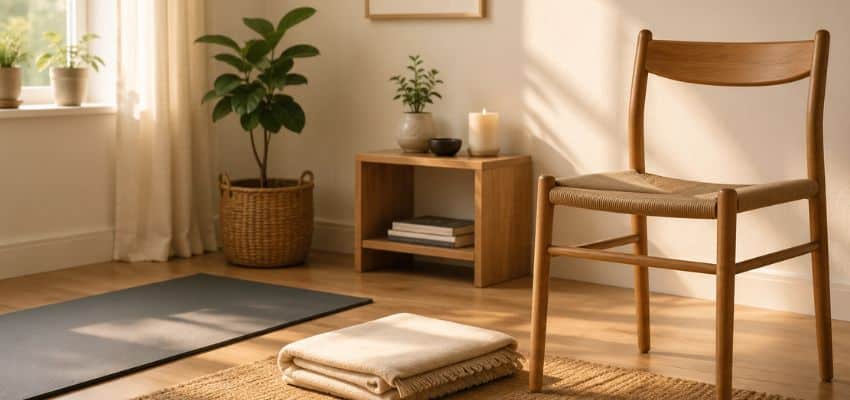
Yes, you can meditate without a cushion. The best first setup is not the most “meditative-looking” one – it is the position you can repeat without making discomfort the whole practice.
A cushion can help later, but it is not required to begin. Start with what you already have, then adjust only the part that gets in the way. The goal is not to build a perfect meditation corner. The goal is to make your next short session easier to start.
- You can meditate on a chair, folded blanket, firm pillow, yoga mat, or with no seated setup at all.
- The goal is a repeatable position, not a perfect pose.
- Do not buy a cushion until you know whether you need height, padding, support, or simply a shorter session.
Meditate on a Chair
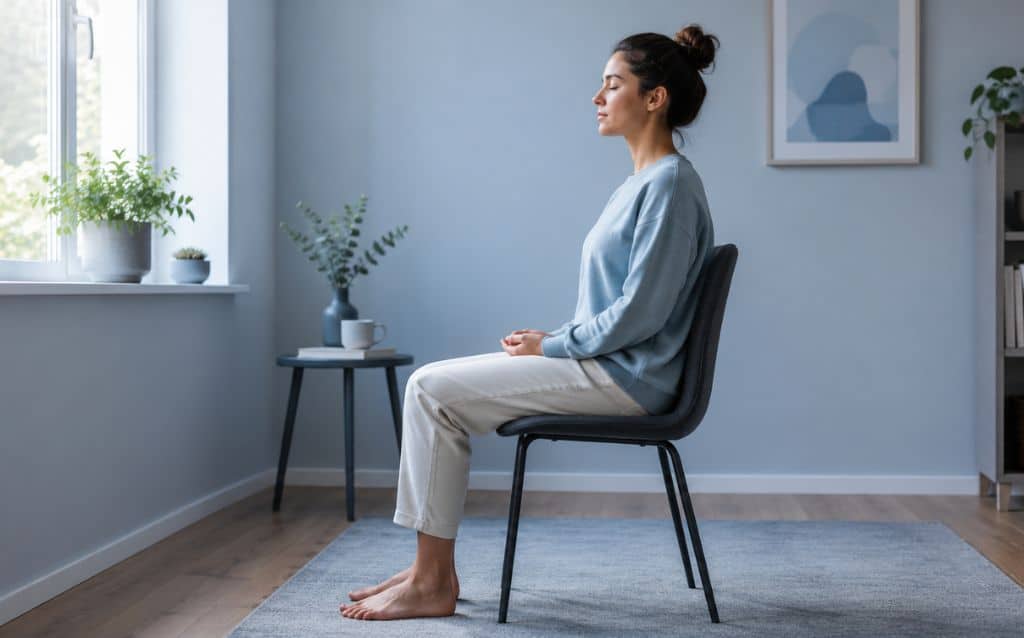
A regular chair is the simplest first test. Sit with both feet flat on the floor, rest your hands on your lap, and keep your back upright without becoming stiff. This is often enough if floor sitting distracts your hips, knees, or lower back.
Use Folded Blankets or a Firm Pillow
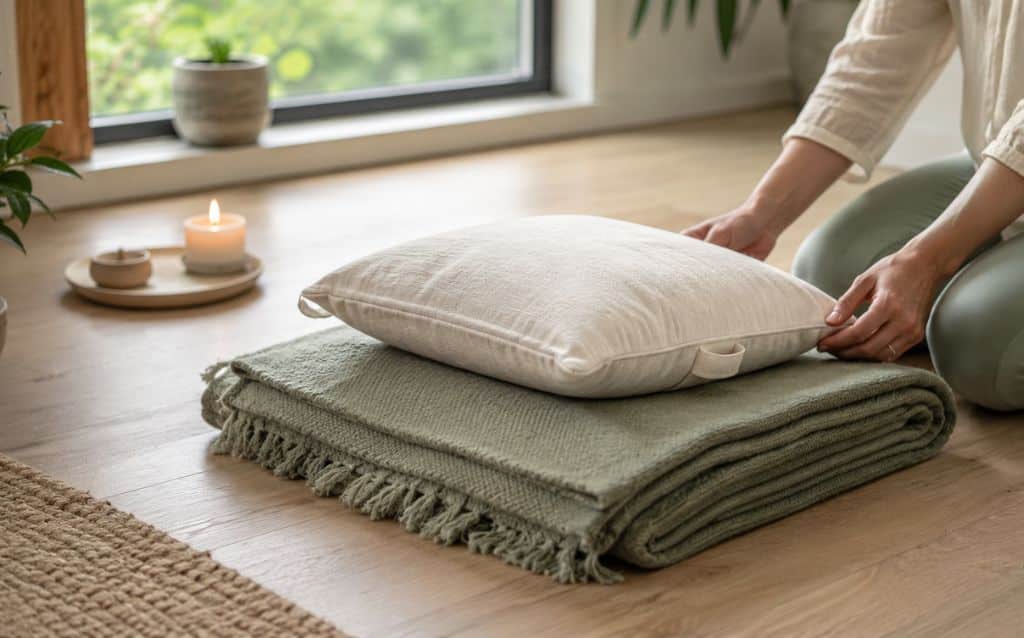
Folded blankets can lift your hips slightly and help you test whether height is the missing piece. A firm pillow can work for short sessions, but avoid anything so soft that your hips sink and your back rounds forward. If height keeps being the issue, use What Height Meditation Cushion Do I Need? before buying anything.
Try a Yoga Mat for Floor Padding
A yoga mat is useful when the floor feels too hard under your ankles, knees, or feet. It adds padding, but usually not much lift. Use it for floor comfort, not as a full replacement for seat height.
Lie Down, Stand, or Walk
If sitting becomes the obstacle, change the form instead of forcing the pose. Lying down can work for body scans or gentle breath practice, though it may make sleep more likely. Standing or walking can be better if stillness feels forced.
How to Choose the Right No-Cushion Option
-
If You Need More HeightChoose folded blankets or a firm pillow. Height helps when your hips feel too low, your knees sit high, or your lower back keeps rounding forward. Start with a small lift instead of buying a cushion right away.Look forA stable lift that keeps your hips slightly higherAvoidSoft pillows that collapse under your weight
-
If You Need More PaddingChoose a yoga mat, folded blanket, or soft floor layer. Padding helps when the floor feels hard under your knees, ankles, or feet, but it will not always solve posture by itself.Look forComfort under knees, ankles, or feetAvoidAssuming padding will fix low hip position
-
If You Need Back SupportChoose a regular chair or sit near a wall. Support helps when your back gets tired before your attention settles, especially in the first few minutes.Look forLight support that helps you stay uprightAvoidLeaning so heavily that you become slumped
-
If Sitting Still Feels Too HardTry standing, walking, lying down, or shortening the session. Sometimes the problem is not the seat at all; it is that the session is longer than your body can comfortably repeat right now.Look forA form you can repeat tomorrowAvoidForcing stillness until practice feels like a test
A Simple 5-Minute Cushion-Free Setup
-
Choose one position
Use the option that feels easiest to repeat today: a chair, folded blanket, firm pillow, yoga mat, lying down, standing, or walking. Do not compare options during the session.
-
Set one short timer
Five minutes is enough for a first test. A short session helps you notice whether the setup works without turning comfort into a long endurance test.
-
Use one posture cue
Pick one simple cue: upright but not stiff, supported but not slumped, or comfortable enough to stay. Keep the cue light instead of constantly correcting your body.
-
Stop before discomfort takes over
End while the setup still feels manageable. The goal is to learn what helps you return tomorrow, not to prove that you can push through an uncomfortable position.
After the session, ask one question: what interrupted practice most – height, padding, support, sleepiness, restlessness, or session length? For a broader low-gear setup, use Smart Meditation Gear for Beginners as the next guide.
How to Sit Comfortably Without Forcing a Pose
How to Know Your Current Setup Is Enough
Enough does not mean perfect. It means the setup is simple, available, and comfortable enough to support another short session. If you are still unsure whether a cushion belongs in your routine, use Do You Need a Meditation Cushion? as the decision guide.
When a Cushion Might Help Later
The same problem keeps repeating
A cushion starts to make sense when the same issue shows up across several sessions, not after one awkward attempt.
You prefer floor sitting
If chair meditation works well, there may be no reason to change. A cushion is more relevant when you want to sit on the floor and need better height or stability.
Blankets or pillows keep collapsing
If makeshift support flattens, shifts, or makes your back round forward, a firmer cushion may be easier to use consistently.
You know what you are solving
Do not buy because meditation looks like it needs a cushion. Buy only when you can name the problem: height, stability, or repeatable comfort. If you reach that point, use Best Meditation Cushions for Beginners as a buying-support guide, not a shortcut to buying early.
What Not to Buy Yet
You need one repeatable place to practice. A chair, blanket, or clear floor space can be enough.
Try a regular chair first. A dedicated chair only makes sense if you already know you need a specific kind of back support.
They solve different problems. A mat or zabuton pads the floor; a cushion adds seat height; a bench changes the kneeling position.
Sometimes buying less is the relief. Keep the setup small enough that starting still feels light. For the mindset behind this, read When buying less starts to feel like relief.
What Meditation Tools Can and Cannot Do
- Tools can reduce friction A chair, blanket, mat, timer, or cushion can make it easier to start and stay reasonably comfortable.
- Tools cannot make the practice automatic They do not replace the act of sitting, noticing, returning, and repeating.
- Tools can support comfort They may help your body settle enough that posture is less distracting.
- Tools are not medical treatment A cushion, app, chair, mat, or timer should not be treated as a cure for anxiety, depression, trauma, pain, or any medical condition.
Use meditation tools as support, not as promises. If a physical or mental health concern is part of the picture, get guidance from a qualified professional.
Common Mistakes to Avoid
-
Buying Before TestingBuying a cushion before trying a chair, blanket, or shorter session can create more clutter without solving the real problem.Look forOne simple test before one simple purchaseAvoidShopping before you know the friction
-
Choosing Softness Instead of SupportA soft pillow may feel comfortable at first, but if it collapses under you, it can make your hips sink and your back round.Look forStable lift or paddingAvoidAnything that flattens immediately
-
Forcing a Cross-Legged PoseCross-legged sitting is not required. If it makes your knees, hips, or back the center of attention, use a chair or another form.Look forA position you can repeatAvoidCopying a pose that creates strain
-
Making the First Session Too LongA setup that works for five minutes may not work for twenty. Start short so you can judge the position without turning it into endurance practice.Look forA short session you can repeat tomorrowAvoidTesting comfort with a session that is too long
FAQ
Do you need a cushion to meditate?
No. You can meditate without a cushion. A cushion is only useful if it solves a real comfort or height problem that keeps interrupting your practice.
Can you meditate on a chair?
Yes. Chair meditation is one of the simplest options for beginners. Keep your feet flat, rest your hands comfortably, and sit upright without forcing a rigid posture.
Can you use a pillow as a meditation cushion?
Yes, for short sessions. Choose a firm pillow if possible. Very soft pillows may collapse and make your hips sink, which can make sitting less stable.
Is a yoga mat enough for meditation?
A yoga mat can be enough if your main issue is floor pressure under your knees, ankles, or feet. It usually adds padding more than height, so it may not solve low hips by itself.
Is it okay to meditate lying down?
Yes. Lying down can work for body scans, breath awareness, or a very low-friction start. The main trade-off is that it may make falling asleep more likely.
When should you buy a meditation cushion?
Consider buying one only after you have tested simple options and the same issue keeps repeating. The clearest reasons are needing more stable seat height, wanting to sit on the floor regularly, or finding that blankets and pillows collapse too easily.
Final Checklist: Can You Keep Practicing Without Buying?
- You tried a regular chair or another no-cushion option.
- You know whether the issue is height, padding, support, or session length.
- You can practice for five minutes without the setup becoming the main problem.
- You are not buying to complete a meditation aesthetic.
- You are only considering gear if it makes practice easier to repeat.
You can meditate without a cushion if your current setup is simple, repeatable, and comfortable enough for a short session. Start with less, notice what actually interrupts practice, and only adjust the part that gets in the way.