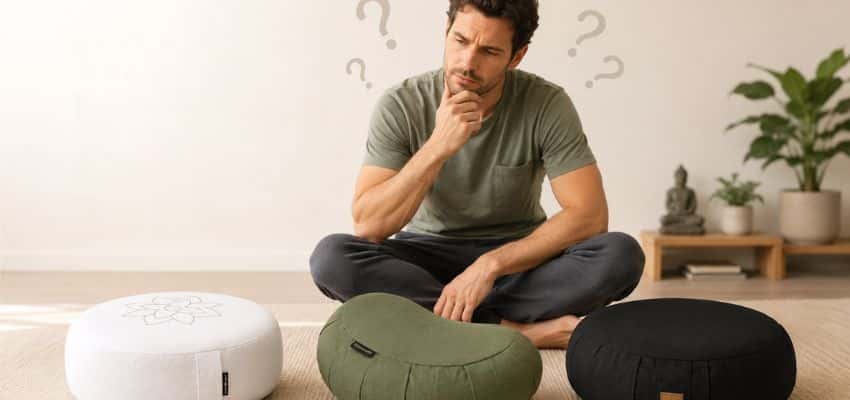
I didn’t buy anything impulsively.
I took my time. I compared options. I chose things that were well-reviewed and thoughtfully designed. On paper, they were better than what I had before.
But after using them for a while, something felt off.
Not disappointment – nothing was wrong with the products themselves. They worked as expected. They looked fine. Still, the feeling I thought would come with “buying better” never really arrived.
Life didn’t feel calmer. My days didn’t feel easier. And I couldn’t explain why.
For a long time, I assumed the answer was simple: maybe I just hadn’t found the right version yet. The quieter one. The more refined one. The one that would finally make daily life feel a little smoother.
So I kept looking.
I thought the problem was the quality
If I bought something better, it should feel better, right?
At the time, that assumption felt completely reasonable.
When something in daily life felt uncomfortable or unsatisfying, the most obvious explanation was that the product itself wasn’t good enough. Maybe the materials were lacking. Maybe the design wasn’t thoughtful. Maybe I had settled too quickly.
So the logic followed naturally. If I chose something better next time, the experience would improve with it. Better quality should lead to a better feeling. At least, that was what I believed.
I upgraded carefully, not impulsively
This wasn’t careless shopping.
I didn’t buy things on impulse or chase trends. I waited before purchasing. I compared options. I paid attention to long-term reviews rather than first impressions. Every upgrade felt considered and intentional.
Choosing higher quality felt like the responsible approach. The thoughtful one. The kind of decision that should make daily life smoother, not more complicated.
And yet, beneath all that careful choosing was a quiet expectation: that if I kept upgrading, the uneasy feeling would eventually disappear.
Buying better didn’t fix the feeling
The item was fine, but the feeling wasn’t
There was nothing obviously wrong with what I bought.
The products worked as intended. They looked good. Some of them were even genuinely enjoyable to use. If someone asked, I could easily explain why I chose them and what made them “better” than what I had before.
Still, the feeling I expected never showed up.
Daily life didn’t feel calmer. Mornings didn’t feel easier. The small friction I wanted to eliminate was still there, unchanged. The improvement existed on the product level, but not on the experience level.
That disconnect was confusing. If the item was fine, why didn’t it change how my days felt?
Nothing was “wrong,” yet something felt off
What made it harder to notice was that there was no clear mistake to point to.
I hadn’t wasted money. I hadn’t bought something cheap or poorly made. There was no dramatic regret. Just a subtle sense that the effort I put into choosing didn’t translate into the ease I was hoping for.
Over time, that pattern repeated itself. Each upgrade promised improvement, and each time the result was the same quiet mismatch. The problem wasn’t a bad decision. It was the growing realization that optimizing products didn’t necessarily reduce the weight of everyday choices.
That was the moment I began to suspect that the issue wasn’t about features at all, but about what I was asking those features to do – something I later explored more clearly when thinking about what actually matters beyond specifications
The regret wasn’t about money
I wasn’t feeling guilty, just tired
The regret I felt didn’t come with panic or shame.
I wasn’t worried about the price. I wasn’t thinking I had made a careless choice. In fact, most of the time I felt confident that the purchase itself made sense.
What lingered instead was a quiet tiredness.
It showed up after the excitement faded. After the item became part of daily life. I noticed it when I had to think about using it, storing it, maintaining it, or deciding whether it was still “worth it.” None of that was dramatic, but it added up.
The feeling wasn’t “I shouldn’t have bought this.”
It was “I’m tired of having to think about this at all.”
The regret didn’t show up right away
The feeling never appeared at the moment of purchase.
It came later, quietly. When the item had already blended into daily life. When it no longer felt new, but still asked for space – physically and mentally. I would notice it in small moments, like hesitating before using something, or feeling slightly annoyed that I had to decide where it belonged.
There was no clear reason to return it. No obvious flaw to justify the discomfort. That was what made the regret confusing. Everything was technically fine, yet I felt a subtle resistance toward things I had once carefully chosen.
Over time, those small moments added up. Not into frustration, but into a low, constant tiredness. A sense that my environment was asking more of me than it was giving back.
That was when I realized the regret wasn’t about money at all. It was about attention.
Every new thing asked for a little more attention
Each purchase came with a small, invisible cost.
Another object to consider. Another choice to revisit. Another decision layered onto days that were already full. Even when the product itself was good, it quietly asked for time, attention, and mental space.
That was when it became clear that what I was feeling wasn’t regret over money, but the weight of too many small decisions. The kind that don’t feel heavy on their own, but slowly crowd out calm when they stack up – something I later understood more clearly through fewer daily decisions.
Once I saw it that way, the discomfort finally made sense.
When I started buying less, something shifted
Not less stuff, but fewer decisions
At first, I didn’t think of it as buying less.
There was no rule, no clear intention to change my habits. I simply stopped upgrading every time something felt slightly imperfect. I paused longer before replacing things. I let some purchases stay undecided.
What changed wasn’t the number of items around me, but the number of decisions I had to make.
There were fewer comparisons. Fewer moments of wondering if I should have chosen differently. Fewer small judgments layered into the day. Without realizing it, I had given myself more mental space simply by choosing less often.
The relief came quietly, not dramatically
Nothing felt instantly better.
There was no sudden sense of freedom or clarity. The relief arrived in small, almost unnoticeable ways. Days felt a little less crowded. Evenings felt less noisy in my head. I wasn’t constantly evaluating what I owned or what I might need next.
That subtle shift was what made it real. The calm didn’t come from finding the perfect item. It came from stepping out of the cycle of constant improvement. Over time, that experience helped me understand how buying less can start to feel like relief
It wasn’t about giving things up. It was about no longer asking every purchase to make life feel better.
It was never about having the best
I didn’t need better products
Looking back, this was the simplest thing to admit.
The problem was never that the things I owned were bad. Many of them were well-made, thoughtfully designed, and worked exactly as they should. Replacing them with newer or “better” versions didn’t change much, because nothing was fundamentally broken to begin with.
What I had mistaken for a quality issue was really a misplaced expectation. I was asking products to do something they were never meant to do – make daily life feel calmer.
No feature, no upgrade, no refinement could solve that.
I needed fewer reasons to think about them
What eventually made the difference wasn’t owning the best version of anything.
It was having fewer reasons to think about my things at all. Fewer moments of comparison. Fewer questions about whether I should replace, upgrade, or optimize. Fewer small decisions quietly competing for attention throughout the day.
When those thoughts faded into the background, calm didn’t have to be created. It simply had space to appear.
I didn’t need better products. I needed fewer decisions asking me to care.
A quieter realization
It took me a long time to see it clearly.
I wasn’t buying the wrong things. I wasn’t careless or chasing trends. I was simply asking too much from every purchase – hoping each one would make life feel a little easier, a little calmer.
Once I stopped doing that, something shifted.
Not because I found the perfect alternative, but because I no longer needed everything I owned to justify itself. Life didn’t become simpler overnight. It just became quieter.
And sometimes, that’s enough.