
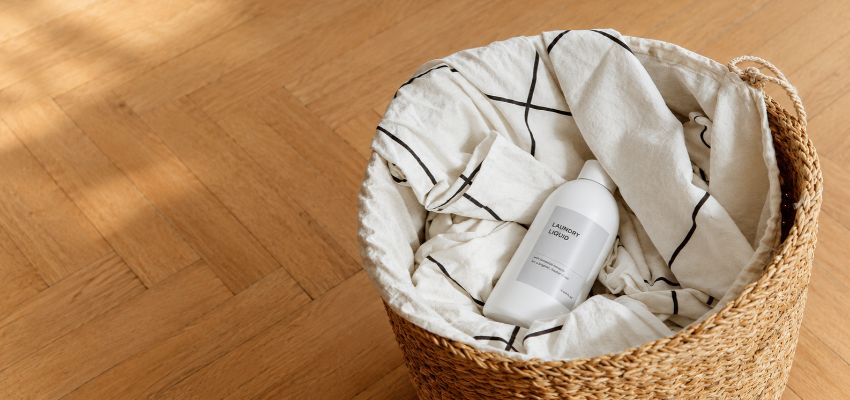
For everyday loads, start with detergent suited to your washer, a way to measure it, a manageable laundry carrier, and somewhere suitable to dry the clothes. Stain treatment and mesh bags become useful when particular garments or recurring messes call for them.
Your setup depends partly on where you wash. Carrying clothes downstairs to shared machines creates different needs from using a washer beside your bedroom. Start with the clothes, machines, and space you have, then choose supplies that make that routine easier.
Start With Detergent, a Laundry Carrier, and a Drying Plan
Before shopping, check what is already available. A household with a usable basket and drying space may only need detergent to begin. Add supplies for a specific task rather than treating every laundry product as part of the starter kit.
Choose One Detergent and Measure It for the Load
Choose Liquid, Powder, or Pods for Your Routine
-
Liquid: adjustable doses and permitted pretreatment
Liquid allows different measured amounts for different loads. Some formulas can also be applied to washable stains when the directions permit it. Consider bottle weight, cap markings, and how easily you can pour.
Look forReadable measurements and a bottle you can handle comfortably.AvoidUsing the same capful after switching to a different concentration. -
Powder: adjustable portions and dry storage
Powder also offers dosing flexibility. Check the directions for your machine and intended wash conditions. Its packaging and scoop need a storage arrangement that keeps the product dry.
Look forInstructions suited to your usual cycles and somewhere dry to keep the package.AvoidComparing package prices without checking the directed dose per load. -
Pods: convenient portions with less flexibility
Packets remove the cap-measuring step, but the label still determines the number to use and where to place them. Fixed portions may be less convenient when you frequently wash very different load sizes.
Look forDirections and a cost per wash that fit your recurring loads.AvoidCutting or opening a packet to create a smaller dose.


The choice between powder and liquid involves storage, measuring, and permitted uses. Laundry pods can simplify carrying supplies to shared machines, but their convenience still needs to be weighed against dosing flexibility.
Measure Detergent Using the Label and Washer Instructions
-
Check the washer’s requirements
Confirm whether the machine requires HE-compatible detergent and where the chosen product belongs. With automatic dosing, follow the machine’s filling and setting instructions rather than adding a separate capful by habit.
-
Read the directions for the actual load
Your detergent dose should account for the factors specified on the label, such as load size, soil, and water hardness. Do not assume that a cap filled to the rim is one standard wash.
-
Measure, then close and put away the product
Use the supplied markings or another suitable measure consistent with the instructions. If pouring regularly creates a mess, a detergent dispenser is an optional aid. Check product storage requirements before transferring anything to another container.
ACI’s storage guidance recommends original labeled containers and secure storage away from children and pets. Close products after use and keep packets in their original packaging rather than a decorative jar.
Choose a Hamper for Storage and a Basket or Bag for Carrying
- Hamper: a place for clothes to wait
A hamper usually stays where worn clothes collect. When choosing a basket or hamper, decide whether storage or carrying is the main job. You can keep one collection point and sort on wash day instead of immediately buying a divided unit.
- Basket or bag: a carrier for the trip
Consider the distance to the machines, doors, stairs, and what else you must carry. A wide basket may be easy to unload but awkward on a narrow staircase. If the same carrier holds dirty and clean laundry, empty it and clean it as needed before placing washed clothes inside.
- Collapsible or rigid: a storage choice
A collapsible or rigid basket changes how the carrier stores and holds its shape. Compare the actual handles, dimensions, and load limits. A folding design saves space only when it is folded; a carrier that stays full still needs a permanent place.
Sort by Care Needs Before Buying More Hampers
- Color and care instructions Check garment labels and separate items that need different treatment. A new dark garment and a white shirt are not a sensible first experiment simply because the drum has room.
- Fabric and construction Delicate knits, straps, and snagging fastenings may need different handling from sturdy everyday clothing. Check pockets and close appropriate fastenings before washing.
- Soil level Heavily soiled workwear may need a different treatment or cycle from lightly worn shirts. More detergent is not a substitute for deciding whether the items belong together.
- Lint, weight, and drying needs Towels and lightweight clothing can differ in more than color. Consider lint transfer, wash requirements, and how the items will dry before combining them.
Make sorting laundry a decision about compatible care needs, not the number of compartments in a hamper. Washing towels with clothes deserves the same check. ACI’s laundry basics explains sorting by color, care requirements, soil, and lint. Add another container when it makes those groups easier to maintain.
Color-catcher sheets are an optional precaution, not permission to ignore a garment’s wash-separately instruction. Follow the sheet’s directions and keep incompatible fabrics or care requirements separate even when their colors look similar.
Add Stain Treatment for the Marks You Actually Get
-
Identify the stain and check the fabric
Recurring food spills or dirty cuffs give you a clearer reason to keep a treatment than a long list of possible accidents. Check both the garment label and the treatment’s permitted fabrics. Some liquid detergents allow pretreatment, so a separate stain-remover bottle is not always needed.
-
Choose a format that suits the task
A stick or spray changes how you apply the treatment. Compare control over a small spot, coverage over a larger patch, and where you will use it. A portable stain pen may have different directions from a prewash stick.
-
Follow the specified contact time
Use the label’s pretreatment time and any restrictions on letting the product dry on the garment. Longer contact is not automatically better. Test colorfastness as directed and do not improvise mixtures of cleaning products.
-
Inspect the mark before applying heat
Check the treated area after washing. If the stain remains, follow suitable retreatment instructions before tumble drying or ironing; heat can make some stains harder to remove. The next step depends on the stain and fabric rather than simply a stronger dose.
Use Mesh Bags for Suitable Delicates, Not to Override Care Labels
Mesh laundry bags are worth considering when those problems recur. For machine-washing bras, check whether the care label allows it, then consider the bag, fastenings, cycle, and drying instructions together. The bag supports the permitted method; it does not replace it.
Plan How Clothes Will Dry Before Adding Finishing Products
Match Tumble, Hang, or Flat Drying to the Care Label
- Tumble drying
Use the heat and cycle permitted for the garment. Access to a dryer does not mean every item can go into it. If you use shared machines, identify the pieces that need a different method before paying for a drying cycle.
- Hanging to dry
Use suitable hangers, a line, or a rack when the care instructions allow it. Plan enough space for the wet load rather than judging a rack only by its folded size. Consider airflow, garment spacing, and where drips will go.
- Drying flat
For garments labeled to dry flat, arrange a clean, suitable surface with airflow and follow any reshaping instructions. An existing arrangement may be enough for an occasional item; add equipment when the same shortage of drying space keeps returning.
Choose Finishing Products for a Specific Need
- Softener and dryer products Fabric softener, dryer sheets, and dryer balls are not prerequisites for every load. Their functions differ. Check fabric and equipment instructions, then choose an addition for a specific result rather than treating the products as interchangeable.
- Scent boosters Fragrance is a preference, not a measure of cleaning. If a load smells stale, investigate how it was washed, dried, and stored instead of automatically adding scent.
- Bleach and other boosters Use only when the product and garment instructions permit it. Bleach types have different uses and restrictions; bleach is not an automatic addition to every wash. Do not mix cleaning products.
Start with detergent compatible with your washer, a reliable way to measure it, a manageable laundry carrier, and a drying plan. Check your everyday clothing labels, machine access, and existing supplies before making the shopping list. Add stain treatment, mesh bags, sorting containers, or drying equipment when a recurring task gives each item a clear job. That keeps the setup useful whether you wash at home or carry your clothes to shared machines.
